

close
Choose Your Site
Global
Social Media
Views: 0 Author: Site Editor Publish Time: 2026-09-22 Origin: Site


Precision in laboratory fluid transfers dictates the reproducibility of all downstream assays. Procurement teams and lab managers face a strict balancing act. You must secure volumetric accuracy, ensure ergonomic safety to prevent repetitive strain injuries, and maintain long-term calibration stability. When technicians transfer reagents or samples, microscopic volumetric deviations compromise sensitive applications like quantitative PCR or complex cell cultures. You need instruments that deliver absolute reliability. This guide breaks down the technical specifications, compliance standards, and operational trade-offs required to evaluate and shortlist the right equipment for your specific workflows. We will examine how different mechanisms interact with specific fluid properties and environmental conditions, moving beyond basic specifications to address real-world laboratory performance.
Match Mechanism to Liquid: Select between air displacement and positive displacement based on the viscosity, volatility, and temperature of the handled liquids.
Prioritize Compliance: Mandate ISO 8655 pipette certification to establish a verifiable baseline for accuracy and precision.
Evaluate Ergonomics Quantitatively: Assess plunger actuation force, tip ejection force, overall weight, and balance to mitigate RSI during prolonged use.
Calculate Total Cost of Ownership (TCO): Factor in calibration frequency, maintenance downtime, and the cost delta between proprietary and universal tip compatibility.
Understanding the operational distinction between micropipettes and macropipettes establishes the foundation for accurate laboratory liquid handling. Standard manual micropipettes typically manage volumes ranging from 0.1 µL to 1,000 µL. These instruments utilize highly sensitive internal pistons and fine-tuned springs to dispense minute quantities of reagents. Technicians rely on micropipettes for molecular biology tasks, assay setups, and microplate preparations where micro-liter precision is non-negotiable. You cannot afford a 1 µL error when setting up a 10 µL restriction enzyme digest.
Macropipettes handle larger volume transfers, generally ranging from 1 mL to 10 mL. These devices bridge the gap between micro-volume tasks and bulk liquid transfers typically managed by serological pipettes or graduated cylinders. Macropipettes feature larger air cushions and more robust piston mechanisms to move significant fluid mass without compromising the internal seals. You must ensure the selected instrument aligns precisely with the specific volumetric demands of your primary assays. Using a macropipette for sub-milliliter transfers introduces unacceptable error margins. Forcing a micropipette to handle multiple maximum-volume transfers accelerates mechanical wear on the internal springs.
The physical properties of your reagents dictate the mechanical design you must choose. Air displacement models represent the standard for aqueous solutions. These devices operate by moving a piston to create a localized vacuum, drawing liquid into the disposable tip. An air cushion separates the liquid from the internal piston. This design works flawlessly for water, buffers, and dilute biological samples. However, the air cushion remains highly susceptible to environmental variables.
Positive displacement mechanisms eliminate the air cushion entirely. The disposable tip includes an integrated capillary piston that makes direct physical contact with the liquid. This design is mandatory for handling viscous, volatile, dense, or corrosive liquids. When you aspirate 50% glycerol, ethanol, or radioactive isotopes, positive displacement ensures the physical properties of the liquid do not alter the dispensed volume.
Temperature differentials severely impact aspiration accuracy in air displacement models. If you transfer a cold liquid with a room-temperature device, the air cushion contracts. This contraction causes the tip to aspirate more liquid than intended. Conversely, warm liquids expand the air cushion, leading to under-dispensing. You must allow the instrument, the tip, and the liquid to reach thermal equilibrium before initiating any transfer protocols.
Feature | Air Displacement | Positive Displacement |
|---|---|---|
Mechanism | Piston moves air to create vacuum; air cushion separates liquid and piston. | Piston makes direct contact with the liquid; no air cushion exists. |
Best Suited For | Aqueous solutions, buffers, standard biological samples. | Viscous, volatile, corrosive, or dense liquids (e.g., glycerol, ethanol). |
Temperature Sensitivity | High. Air cushion expands/contracts with temperature changes. | Low. Direct contact mitigates thermal expansion issues. |
Contamination Risk | Moderate. Aerosols can reach the internal shaft without filter tips. | Minimal. The disposable capillary piston prevents internal contamination. |
Selecting the correct volume capacity requires adherence to established physical principles. The golden rule of thumb for volume selection dictates that optimal accuracy is achieved when working within 35% to 100% of the instrument's nominal volume. While a 100 µL model technically allows you to set the dial to 10 µL, the mechanical tolerance at that extreme low end introduces significant random error. If your protocol requires a 10 µL transfer, you should utilize a 10 µL or 20 µL device to maintain strict data integrity.
You must also factor in pipetting frequency and throughput demands. Assess how often your personnel perform specific transfers. Fixed volume models offer superior reliability for high-repetition, standardized assays. They contain fewer moving parts, eliminate the risk of accidental volume adjustments during use, and generally hold their calibration longer under heavy workloads.
Conversely, an adjustable volume pipette provides the flexibility required for multi-protocol workflows. Modern adjustable models feature locking mechanisms to secure the volume setting during use, preventing inadvertent drift. When outfitting a diverse research environment, a carefully curated set of adjustable models covers the widest range of applications while minimizing equipment footprint.
To optimize your volume selection, follow these operational steps:
Audit the standard operating procedures for your most frequent assays to identify the most common transfer volumes.
Select instruments where your target volumes fall within the upper 50% of the nominal capacity.
Deploy fixed-volume models for dedicated workstations that perform identical transfers daily.
Equip general-use benches with adjustable models featuring secure volume locks.
Evaluating a precision manual pipette requires a clear distinction between accuracy and precision. Accuracy represents the proximity of the dispensed volume to the target volume. It measures systematic error. If you set the dial to 50 µL and the device dispenses 48 µL consistently, the instrument is inaccurate but precise. Precision defines the reproducibility of multiple dispenses. It measures random error. If you attempt five 50 µL transfers and get 49 µL, 52 µL, 47 µL, 51 µL, and 50 µL, the instrument lacks precision.
Thermal transfer from the user's hand to the device body significantly impacts both metrics over extended sessions. As a technician holds the instrument, body heat transfers through the plastic housing into the internal metallic or polymer components. This thermal energy causes slight expansion of the internal cylinder and alters the dynamics of the air cushion. High-grade instruments utilize advanced thermal insulation materials and specialized polymers to mitigate this volume drift, ensuring the first dispense matches the hundredth dispense during a long microplate setup.
Error Type | Common Causes | Troubleshooting Action |
|---|---|---|
Poor Accuracy (Systematic) | Internal wear, damaged seals, incorrect calibration setting. | Perform gravimetric calibration; replace internal O-rings and seals. |
Poor Precision (Random) | Inconsistent operator technique, poor tip fit, fluctuating ambient temperature. | Standardize operator training; verify tip compatibility; stabilize room temperature. |
Volume Drift Over Time | Thermal transfer from hand, loosening volume lock. | Use insulated models; engage volume lock securely before starting. |
International standards govern the acceptable performance metrics for volumetric apparatuses. Mandating an ISO 8655 pipette ensures your equipment meets rigorous global benchmarks. The ISO 8655 standard explicitly defines the maximum permissible errors for both systematic and random errors at various volume fractions. This certification guarantees the instrument performs within strictly defined tolerances out-of-the-box.
You must understand the difference between a factory calibration certificate and ongoing gravimetric calibration requirements. A factory certificate proves the device met ISO standards at the time of manufacture under highly controlled environmental conditions. Mechanical wear, accidental drops, and routine use degrade performance over time. Maintaining compliance requires establishing a rigorous in-house or third-party gravimetric calibration schedule.
Gravimetric testing involves dispensing distilled water onto a highly sensitive analytical balance, measuring the mass, and converting it to volume using the Z-factor. The Z-factor accounts for water density, ambient temperature, and barometric pressure.
Standard gravimetric calibration requires the following environmental controls:
Ambient temperature must remain stable between 15°C and 30°C, with fluctuations not exceeding ±0.5°C during the test.
Relative humidity should stay above 50% to prevent rapid evaporation of the dispensed water on the balance pan.
The analytical balance must feature a draft shield and an evaporation trap to ensure accurate mass readings.
Test liquid must sit in the testing room for at least two hours to reach thermal equilibrium.
Laboratory personnel often perform hundreds of repetitive motions daily. This repetitive stress creates a severe risk for musculoskeletal disorders, particularly repetitive strain injuries like thumb tenosynovitis or carpal tunnel syndrome. Evaluating ergonomics quantitatively is a mandatory safety protocol. You must assess the plunger actuation force. Benchmark metrics suggest the downward force required to aspirate and dispense should remain below 15 Newtons. Lower actuation forces dramatically reduce tendon strain during high-throughput tasks.
Tip ejection force represents another critical ergonomic metric. Forcing a tightly sealed plastic tip off the shaft requires significant thumb pressure. Advanced designs utilize geared ejection mechanisms or dual-action buttons to reduce this force to below 20 Newtons. Overall weight and balance also play crucial roles. A lightweight instrument with a center of gravity resting naturally in the web of the hand allows personnel to work longer without fatigue.
Ambidextrous usability ensures both left- and right-handed users can operate the volume adjustment, plunger, and tip ejector without awkward wrist angles. Ergonomic grip designs, including finger hooks, allow the device to rest passively in the hand between dispenses, eliminating the need for a constant, fatiguing grip.
The physical geometry of the instrument actively facilitates or hinders proper technique. Proper aspiration requires the device to remain perfectly vertical. Tilting the shaft alters the hydrostatic pressure on the tip, leading to over-aspiration. You should look for designs with clear sightlines that do not obstruct the user's view of the tip and the sample vessel. Unobstructed visibility naturally promotes the correct vertical alignment.
Users must easily gauge optimal tip immersion depth. Immersing the tip too deeply increases external pressure, forcing extra liquid into the tip. Immersing it too shallowly risks aspirating air bubbles. For micro-volumes, the ideal depth is 1 to 2 mm. For macro-volumes, it extends to 3 to 6 mm. A well-designed shaft and tip cone configuration allows technicians to monitor immersion depth effortlessly, reducing technique-driven volume errors.
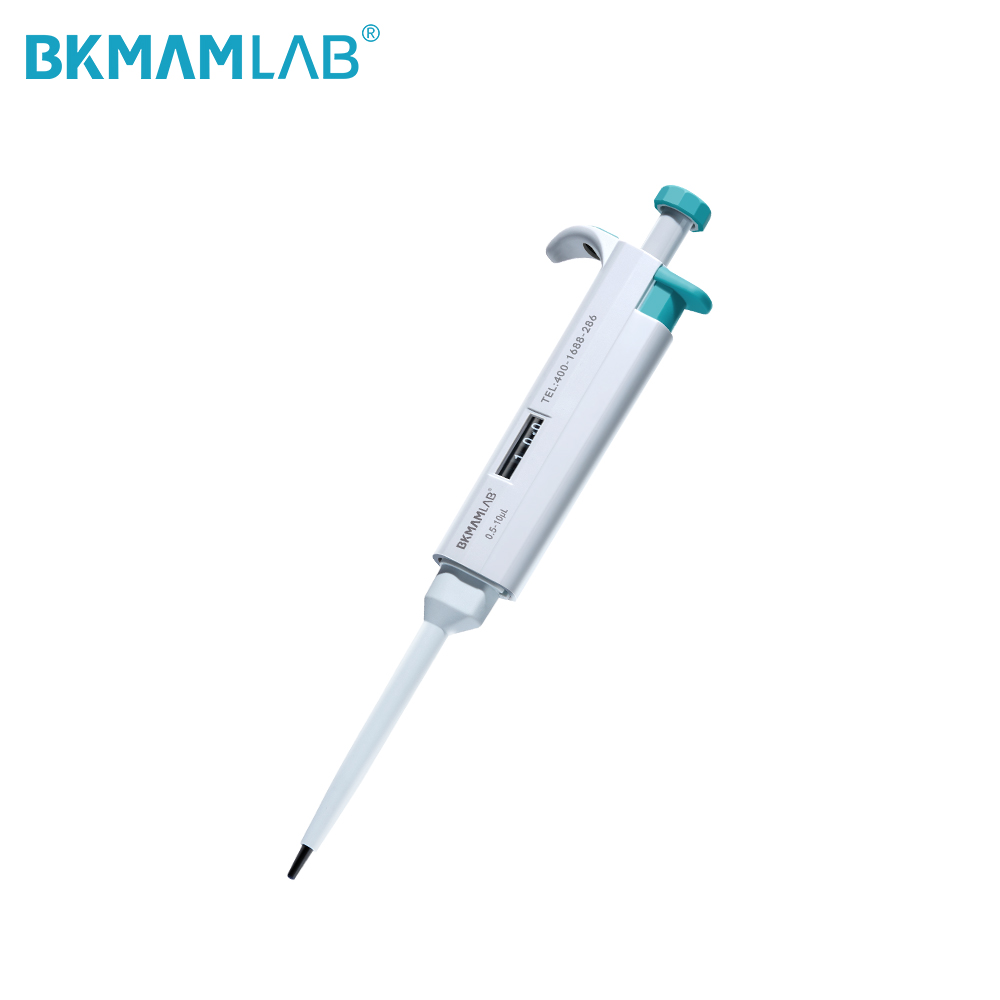
Analyzing throughput requirements relative to standard microplate formats dictates the choice between single-channel and multichannel configurations. Single-channel models offer maximum versatility for tube-to-tube transfers, microcentrifuge work, and variable sample preparations. Populating a 96-well or 384-well plate with a single-channel device consumes excessive time and increases the risk of operator fatigue and tracking errors.
Multichannel models exponentially increase throughput for microplate-based assays like ELISAs or PCR setups. They allow simultaneous transfer across entire rows or columns. This efficiency introduces inherent mechanical trade-offs. Multichannel devices require higher overall actuation force because the user compresses multiple internal springs simultaneously. Achieving a perfect, airtight seal across 8 or 12 tips simultaneously demands strict tip-sealing verification. If even one tip fails to seal properly, that specific channel will under-dispense, ruining the assay row. Advanced multichannel designs incorporate flexible suspension systems in the tip cones to ensure uniform sealing force across all channels without requiring excessive downward pressure.
Biological and chemical workflows expose equipment to harsh environments. Material durability and sterilization capabilities determine the instrument's lifespan. Fully autoclavable models allow technicians to place the entire device into an autoclave to achieve complete sterilization. This capability is vital for microbiology, cell culture, and clinical diagnostics where absolute sterility is required.
Half-autoclavable models only permit the removal and sterilization of the lower part. While this addresses direct contamination risks at the fluid interface, it leaves the upper handle vulnerable to surface contamination. You must evaluate the specific contamination risks of your protocols when choosing between these options.
Assess the necessity of UV resistance and chemical compatibility. Instruments used continuously inside biosafety cabinets undergo prolonged exposure to ultraviolet germicidal irradiation. Standard plastics degrade, become brittle, and discolor under UV light. UV-resistant polymers maintain structural integrity. If your workflows involve harsh solvents, acids, or bases, the internal seals and external housing must feature chemically inert materials to prevent degradation and maintain airtight seals.
Material Component | Common Application | Chemical/Environmental Resistance |
|---|---|---|
PTFE (Polytetrafluoroethylene) Seals | Internal O-rings and piston seals. | Highly resistant to harsh solvents, acids, and bases. Prevents internal degradation. |
UV-Resistant Polymers | External housing for biosafety cabinet use. | Resists embrittlement and discoloration from prolonged UV exposure. |
Stainless Steel Pistons | Internal mechanisms for macro-volumes. | Durable against mechanical wear; susceptible to highly corrosive acids if exposed. |
Ceramic Pistons | Internal mechanisms for micro-volumes. | Impervious to chemical corrosion and thermal expansion; highly durable. |
The performance of any liquid handling instrument relies entirely on the quality of the disposable tip attached to it. The instrument and the tip function as a single, integrated fluid dynamics system. Adopting universal-fit models provides operational flexibility, allowing procurement teams to source high-quality tips from multiple vendors to avoid supply chain disruptions. Locking into a proprietary tip ecosystem restricts flexibility, though manufacturers often claim it guarantees superior sealing and accuracy.
Tip quality directly impacts analytical performance. You must inspect tips for molding flash, which disrupts fluid flow and causes droplet retention. Straightness is critical. A warped tip makes accessing narrow tubes difficult and alters the aspiration angle. High hydrophobicity ensures maximum sample recovery, preventing valuable or sticky reagents from clinging to the inner walls. Always verify manufacturer-recommended tip compatibility before finalizing a purchase. Using incompatible tips leads to poor sealing, dropped tips, and catastrophic volume inaccuracies.
Routine maintenance prevents unexpected operational downtime. You must assess the ease of maintenance for any prospective instrument. Lab personnel should possess the ability to easily disassemble the lower half, clean the internal components, and replace worn O-rings and seals in-house without requiring specialized factory tools. Regular cleaning removes aerosolized contaminants and chemical residues that degrade internal mechanics.
Evaluate the availability of spare parts and authorized calibration service centers. Instruments require periodic professional servicing to replace internal springs, re-grease pistons, and perform certified gravimetric calibrations. Selecting equipment supported by a robust local or regional service network minimizes the time instruments spend out of the lab. Establish a clear lifecycle management plan that dictates daily cleaning, monthly seal inspections, and annual or bi-annual certified calibrations based on usage frequency.
Cross-contamination ruins experiments and generates false data. You must implement hardware features and procedural protocols to mitigate aerosol and liquid contamination. When liquid is aspirated abruptly, microscopic aerosols travel up the tip and enter the internal shaft. Over time, these aerosols accumulate, cross-contaminating subsequent samples.
Hardware features like safe cone designs and easily removable lower parts facilitate rapid decontamination if liquid accidentally enters the shaft. Some models incorporate replaceable safe-cone filters directly into the tip cone to block aerosols before they reach the internal piston. You must also establish clear guidelines on when to rely on internal design features versus when to mandate the use of barrier tips. Filter tips contain a hydrophobic porous barrier that physically blocks aerosols and liquids from entering the shaft. They are mandatory for PCR, RNA handling, and infectious disease protocols where even trace contamination is unacceptable.
The optimal Manual Pipette is not merely the one with the tightest accuracy specifications on paper. It is the instrument that maintains ISO-certified precision while safeguarding user ergonomics and supporting proper technique under real-world laboratory conditions. Balancing mechanical reliability with user comfort ensures long-term data integrity and operational efficiency.
Take the following steps to finalize your procurement process:
Audit your current liquid types and volume ranges to determine the exact mix of air and positive displacement models needed.
Measure the actuation and ejection forces of your existing equipment to establish a baseline for ergonomic improvements.
Request demo units from shortlisted manufacturers to conduct hands-on tip-fit verification and user comfort trials.
Establish a standardized gravimetric testing schedule based on the usage frequency of each new instrument.
A: Air displacement models use an internal air cushion to separate the piston from the liquid, making them ideal for standard aqueous solutions. Positive displacement models feature a capillary piston that makes direct physical contact with the liquid. This direct contact is necessary for accurately handling viscous, volatile, or dense liquids.
A: Calibration frequency depends on usage intensity and the criticality of the assays. Standard practice dictates professional gravimetric calibration every 6 to 12 months. Instruments used daily in highly regulated environments may require quarterly calibration and routine weekly in-house performance verifications.
A: Accuracy loss typically stems from mechanical wear or contamination. Degraded O-rings, worn seals, or scratched internal pistons compromise the airtight vacuum required for precise aspiration. Aerosolized chemicals or biological residues can also accumulate inside the shaft, altering internal friction and fluid dynamics.
A: Not always. While many instruments accommodate universal tips, the seal quality varies based on the specific taper of the tip cone and the flexibility of the tip collar. Poorly fitting universal tips cause micro-leaks, resulting in significant volume inaccuracies. Always validate tip compatibility gravimetrically.
A: Acceptable error margins are defined by ISO 8655 standards and vary by volume. For a standard 1000 µL device, the maximum permissible systematic error is typically around ±0.8%, and the random error is ±0.3%. Smaller volume devices have slightly higher percentage tolerances due to micro-volume fluid dynamics.
A: Prevent RSI by selecting instruments with low plunger actuation force (under 15 Newtons) and low tip ejection force. Utilize ambidextrous, lightweight designs. Implement administrative controls, such as rotating tasks among personnel, taking frequent micro-breaks, and ensuring technicians maintain neutral wrist postures during operation.
A: A well-designed instrument features clear sightlines that do not obstruct the user's view of the sample vessel. This visibility encourages the user to maintain the required 90-degree vertical aspiration angle. Proper shaft geometry also helps technicians visually gauge and maintain the correct tip immersion depth.


