

close
Choose Your Site
Global
Social Media
Views: 0 Author: Site Editor Publish Time: 2026-09-08 Origin: Site


Reliable laboratory data begins with accurate liquid handling. Even microscopic deviations in pipetting compromise downstream assays, invalidate results, and waste expensive reagents. Lab managers and principal investigators frequently face procurement dilemmas when outfitting a new facility or upgrading bench equipment. Selecting the wrong volume range or failing to match the instrument to the specific fluid dynamics of the assay leads to systematic errors, increased calibration failures, and poor reproducibility. You need a structured approach to evaluate liquid handling specifications. This guide breaks down standard volume ranges, outlines evaluation criteria for procurement, and details how to align instrument capabilities with specific laboratory workflows. We will look at practical applications, from ultra-low volume PCR setups to bulk media transfers, ensuring your bench is equipped for maximum accuracy.
The "Smallest Capable" Rule: To maximize accuracy and precision, always select the smallest capacity micropipette capable of handling the target volume (e.g., use a 20-200 μL pipette for 150 μL, not a 100-1000 μL pipette).
Volume-Specific Applications: Ultra-low volume pipettes (0.1-2.5 μL) are mandatory for molecular biology (PCR, qPCR), while mid-to-high ranges (20-1000 μL) serve biochemical assays, cell culture, and buffer preparation.
Total System Performance: A precision micropipette is only as reliable as its tip fit and calibration frequency; ISO 8655 compliance and ergonomic design must factor heavily into purchasing decisions.
Risk Mitigation: Operator technique, liquid properties (viscosity, volatility), and environmental factors dictate whether an air displacement or positive displacement micropipette is required.
Defining the fundamental requirement of liquid handling is straightforward: delivering an exact volume with high repeatability (precision) and exactness (accuracy). Achieving this requires understanding the physical limitations of the instruments used to move fluids. Every laboratory relies on a reliable Micropipette to handle microscopic volumes that standard glassware simply cannot measure. You cannot manage microliter-scale reactions without understanding how these tools function internally.
We must establish the boundary between general pipettes and micropipettes. Standard serological pipettes handle milliliter (mL) volumes. Micropipettes handle the microliter (µL) range, typically spanning from 0.1 µL up to 5,000 µL. The critical conversion metric to remember is that 1000 µL equals 1 mL. Keeping this conversion top of mind ensures you correctly map assay protocols to instrument specifications without off-by-a-factor-of-ten errors, which frequently occur during rapid protocol scaling.
Most standard volume ranges refer to air displacement models. These rely on an internal air cushion that expands and contracts based on the volume settings adjusted by the user. The mechanical sequence operates in four distinct phases:
Plunger Depression: The user presses the plunger to the first stop, moving the internal piston down and expelling a specific volume of air equivalent to the set volume.
Tip Immersion: The user submerges the disposable plastic tip just below the surface of the target liquid.
Vacuum Creation: The user slowly releases the plunger. The piston rises, creating a partial vacuum inside the shaft.
Liquid Aspiration: Atmospheric pressure pushes the liquid up into the tip to fill the void left by the rising piston.
Positive displacement models, by contrast, use a capillary and piston integrated directly into the tip, making physical contact with the liquid. This eliminates the air cushion entirely, which is highly beneficial for specific edge-case liquids.
The physics of air displacement dictate a strict 10% to 100% operating window. An air cushion is highly susceptible to thermal expansion, atmospheric pressure, and humidity. If you attempt to measure 5 µL using a 100 µL instrument, the massive volume of air relative to the tiny volume of liquid acts like a weak spring. The air compresses or expands slightly due to the heat from your hand or the ambient temperature in the lab. This thermal transfer causes massive percentage errors in the aspirated liquid. Operating in the 50% to 100% range of the instrument's nominal capacity yields the highest statistical reliability. The smaller the air cushion relative to the liquid volume, the more accurate the transfer.
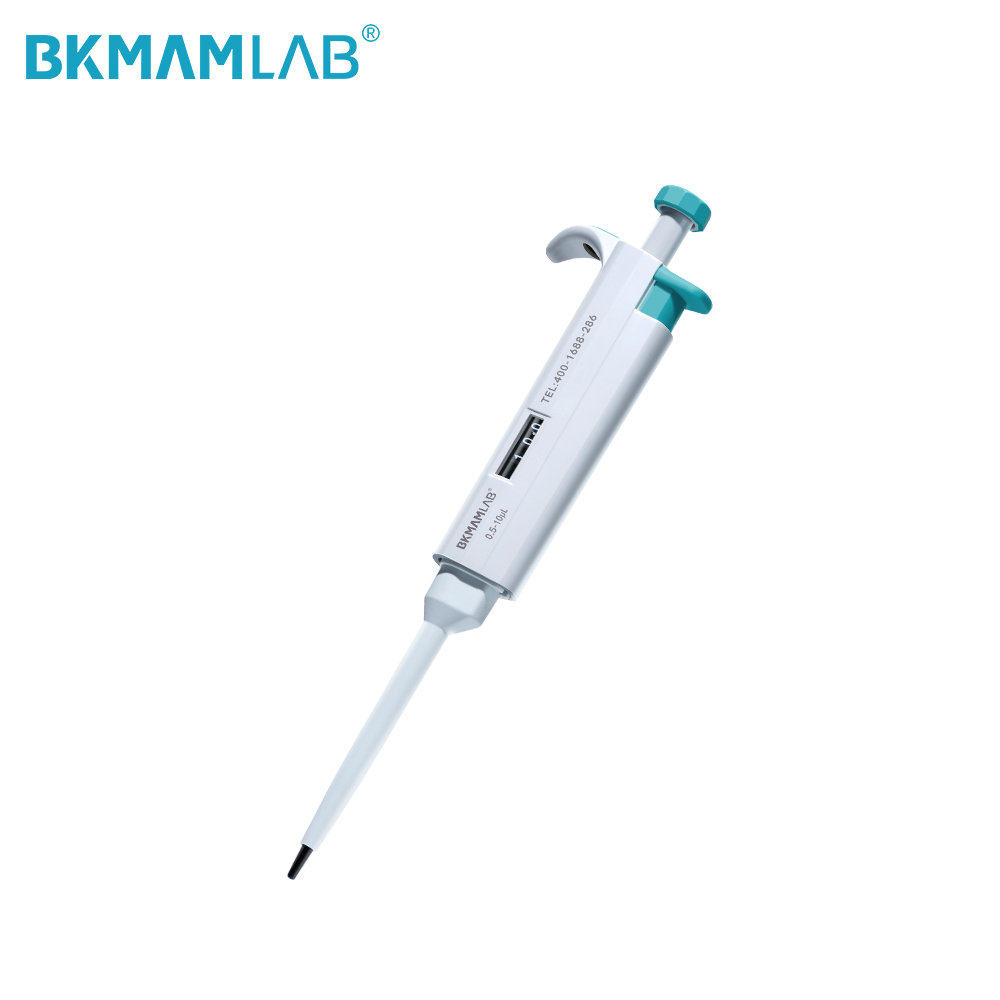
Industry-standard naming conventions like P2, P20, P200, and P1000 are based strictly on the maximum volume that can be aspirated and dispensed by that specific instrument. A P20 handles up to 20 µL, while a P1000 handles up to 1000 µL. Breaking down these standard classifications helps map them directly to specific laboratory applications. You must match the tool to the assay to maintain data integrity.
Working at the microscopic scale requires specialized equipment. Target applications for these ultra-low volumes include DNA and RNA quantification, PCR and qPCR setup, sequencing preparation, and handling scarce or highly expensive enzymes. At this scale, a fraction of a microliter makes the difference between a successful amplification and a failed run. When setting up a master mix, the enzyme (like Taq polymerase) is often pipetted in volumes of 0.5 µL to 1 µL.
Selecting a 0.1-2.5 μL pipette introduces extreme vulnerability to user error. Thermal transfer from the user's hand can heat the internal air cushion, causing it to expand and push liquid out of the tip before dispensing. Evaporation is also a massive risk; a 1 µL droplet can evaporate visibly within seconds if left exposed to ambient air. Operators must dispense these tiny volumes directly into the liquid of the receiving tube or touch the droplet off on the side wall to ensure complete transfer.
Procurement for this range demands attention to mechanical gearing. The instrument requires exceptional internal components to ensure micro-step accuracy. Furthermore, you must purchase ultra-micro tips specifically designed to fit the narrow shaft of a P2 or P10. Standard tips will not form a proper seal, rendering the instrument useless.
The mid-range instruments handle the bulk of daily bench work. Target applications include ELISA setups, serial dilutions, protein assays, and general biochemical reagent dispensing. Because these volumes are common in standard microplate assays, these instruments see continuous, repetitive use. For example, a standard Bradford protein assay often requires dispensing 10 µL to 20 µL of sample into 200 µL of reagent.
The 20-200 μL pipette is often the most heavily used tool on the bench. When evaluating this category, focus on robust internal components that can withstand high-frequency use without calibration drift. A weak internal spring or a poorly seated seal will degrade rapidly under the stress of hundreds of daily plunger actuations. You will notice this degradation during routine gravimetric testing when the random error (imprecision) begins to spike.
Overlap considerations frequently cause confusion. If your protocol requires exactly 20 µL, you face a choice between a P20 (operating at its maximum capacity) and a P200 (operating at its minimum optimal capacity). Reiterate the "smallest capable" rule here. You should always favor the P20 for exactness. Operating at 100% capacity minimizes the air cushion, providing a much tighter coefficient of variation than operating a larger instrument at 10% capacity.
High-volume transfers move out of the realm of delicate molecular biology and into general lab prep. Target applications involve cell culture media transfer, sample extraction, buffer preparation, and chemical aliquoting. These instruments handle volumes up to 1 mL, with larger variants like the P5000 handling up to 5 mL. When resuspending a cell pellet in 1 mL of media, you need an instrument that can move the liquid quickly without shearing the cells.
When transferring bulk reagents, a 100-1000 μL pipette provides speed and efficiency. The trade-off is a slight drop in absolute micro-precision. A deviation of 2 µL on a 1000 µL transfer is statistically insignificant for a buffer solution, whereas a 2 µL deviation on a 10 µL PCR reaction is catastrophic. Operators must be careful not to release the plunger too quickly with high-volume instruments. A rapid release causes the liquid to shoot up into the tip, potentially splashing into the internal shaft and contaminating the piston.
Ergonomic factors become highly relevant at this scale. Larger volume instruments require larger internal pistons and stronger springs to move greater volumes of air. This translates to greater plunger force. For high-throughput labs where technicians perform hundreds of transfers a day, this increased resistance can lead to hand fatigue.
You must evaluate how the physical features of the instrument translate to measurable outcomes on the bench. Procurement should focus on accuracy, ergonomics, and long-term maintenance requirements. Do not base purchasing decisions solely on brand recognition; evaluate the engineering.
Manufacturers report performance using two distinct metrics: accuracy and precision. Accuracy refers to systematic error, or how close the dispensed volume is to the target volume. Precision refers to random error, or how closely multiple dispenses of the same volume match each other. A high-quality precision micropipette minimizes both.
When reviewing specifications, instruct buyers to look at the error rates at minimum, half, and maximum volumes. An instrument might boast a 0.5% inaccuracy at maximum volume, but that error could jump to 3% at its minimum volume. Understanding this curve prevents you from using an instrument outside its reliable range.
Volume Range Model | Optimal Operating Range | Common Laboratory Applications | Primary Risk Factor |
|---|---|---|---|
P2 / P10 | 0.2 µL - 10 µL | PCR, qPCR, DNA sequencing, enzyme handling | Thermal expansion from hand heat; rapid evaporation |
P20 / P200 | 20 µL - 200 µL | ELISA, serial dilutions, protein assays | Mechanical wear from high-frequency repetitive use |
P1000 | 100 µL - 1000 µL | Cell culture, buffer prep, sample extraction | Ergonomic strain from high plunger resistance |
P5000 | 500 µL - 5000 µL | Bulk reagent transfer, media aliquoting | Liquid splashing into the shaft due to fast aspiration |
The physical design of the instrument directly impacts user health. Repetitive Strain Injury (RSI) is a severe occupational hazard in laboratories. Prolonged assay setups require thousands of thumb movements. Evaluate the plunger activation force, tip ejection force, overall weight, and grip design. Some older models require up to 40 Newtons of force to eject a tip, which is unacceptable for modern high-throughput workflows.
A heavy instrument with a stiff spring forces the user to exert excessive pressure. Over months and years, this causes inflammation in the thumb and wrist tendons. Look for models with soft-spring technology and low-force tip ejectors. The grip should rest naturally in the hand without requiring a tight squeeze to keep it stable during dispensing. A finger hook is a mandatory feature, allowing the instrument to hang loosely from the index finger between pipetting steps.
For regulated environments operating under Good Laboratory Practice (GLP) or Good Manufacturing Practice (GMP), compliance is non-negotiable. ISO 8655 is the international standard for piston-operated volumetric apparatus. It defines the maximum permissible errors and the methodology for testing.
Evaluate how easily the instrument can be calibrated in the lab. Some models require specialized tools and factory resets, while others allow quick adjustments using a simple key. Autoclavability is another critical factor. Fully autoclavable models can be sterilized entirely, which is vital for microbiology and cell culture to prevent cross-contamination. Half-autoclavable models only allow the lower shaft to be sterilized.
Implement a strict internal maintenance routine to extend the lifespan of your instruments. A standard monthly check should include:
Visual Inspection: Check the shaft for scratches or chemical damage that could compromise the tip seal.
Cleaning: Wipe down the exterior with 70% ethanol or a mild detergent.
Seal and O-ring Check: Inspect the internal O-ring for wear and apply manufacturer-approved lubricant if necessary.
Gravimetric Testing: Perform a quick 4-point weight check using a microbalance and distilled water to verify accuracy.
As laboratory throughput increases, moving liquid one well at a time becomes a massive bottleneck. Transitioning from single-channel to multichannel models requires analyzing specific conceptual trade-offs. You must balance flexibility against speed.
Single-channel instruments offer maximum flexibility. You can move liquid between tubes, flasks, and plates of varying sizes. Multichannel instruments, available in 8-, 12-, or 16-channel configurations, are designed specifically for microplate workflows. If your lab routinely performs ELISAs or cell-based assays in 96-well plates, an 8-channel or 12-channel model reduces a 96-step process to just 12 or 8 steps. This drastically cuts down on setup time and reduces the risk of RSI.
Feature | Single-Channel | Multichannel (8, 12, 16) |
|---|---|---|
Flexibility | High. Works with tubes, flasks, and plates. | Low. Restricted to specific microplate formats. |
Throughput Speed | Slow. One transfer at a time. | Fast. Up to 16 transfers simultaneously. |
Volume Range | Wide. 0.1 µL up to 5000 µL. | Limited. Typically maxes out at 300 µL or 1200 µL. |
Maintenance Complexity | Low. Single piston and seal to maintain. | High. Multiple pistons require precise alignment. |
Multichannel instruments have strict volume limitations. They typically max out at 300 μL or 1200 μL. You cannot use them for very high-volume transfers. Furthermore, they require perfectly aligned tips. If one tip out of eight fails to seal properly, that single well will receive an incorrect volume, potentially ruining an entire row of data. You must press down firmly to ensure all nozzles engage the tips evenly.
Map your procurement directly to your plate formats. An 8-channel model aligns perfectly with the columns of a 96-well plate. A 16-channel model is necessary if you are scaling down to 384-well microplates. Ensure your lab actually runs enough plate-based assays to justify the investment in multichannel technology.
Even the correct volume range will fail if the liquid properties or operator techniques are flawed. Standard air-displacement technology assumes you are moving aqueous solutions at room temperature. Deviating from this baseline introduces significant implementation risks that you must manage on the bench.
Viscous liquids like glycerol, Tween-20, or concentrated protein solutions cling to the inside of the plastic tip. When you dispense, a thin film remains behind, meaning you deliver less volume than intended. Volatile liquids like ethanol or acetone evaporate rapidly into the air cushion. This increases the internal pressure, causing the liquid to leak out of the tip before you can dispense it. Dense liquids like sulfuric acid require more force to lift, causing the air cushion to stretch, which results in under-aspiration.
To mitigate these issues, you have two options. The first is to use positive displacement pipettes, which have no air cushion and physically wipe the inside of the tip clean during dispensing. The second is to use reverse pipetting techniques with your standard air-displacement instrument. Reverse pipetting involves pressing the plunger past the first stop to the second stop during aspiration, drawing up extra liquid. You then dispense only to the first stop, leaving the excess liquid in the tip. This compensates for viscosity and volatility.
A precision instrument is only half of the liquid handling system; the disposable tip is the other half. Relying on cheap, non-compatible universal tips is a false economy. The tip fit directly impacts the air seal. If the tip does not form a perfect, airtight seal against the shaft, air will leak during aspiration. This alters the dispensed volume regardless of the instrument's internal accuracy.
Always verify tip compatibility. While many universal tips work adequately for general buffer transfers, sensitive assays require tips specifically engineered by the manufacturer to match the exact taper and diameter of the instrument shaft. Using mismatched tips often requires the operator to bang the instrument into the tip box to force a seal, which damages the internal shaft over time.
The most advanced instrument will fail if the operator ignores fundamental techniques. Proper pre-wetting is essential. Aspirating and dispensing the liquid two or three times before the actual transfer humidifies the air cushion, preventing evaporation during the actual measurement. This is especially critical for volumes under 10 µL.
Immersion depth matters. Plunging the tip too deep into the liquid causes droplets to cling to the outside of the tip, adding excess volume. Barely touching the surface risks aspirating air bubbles. Finally, vertical aspiration angles must be maintained. Tilting the instrument during aspiration alters the hydrostatic pressure, changing the volume drawn into the tip. Consistent, vertical technique is mandatory for reproducible results.
Choosing the right liquid handling equipment requires building a fleet of instruments tailored to the specific volume ranges of the lab's core assays. Understanding the mechanics of air displacement, the strict operating windows of standard volume ranges, and the physical properties of the liquids you handle ensures you capture accurate data from the very first step of your protocol. Do not compromise on ergonomics or tip compatibility, as these factors directly dictate long-term performance and operator health.
Take the following actions to finalize your procurement strategy:
Audit your current standard operating procedures to identify the most frequent liquid transfer volumes across your primary assays.
Request demo units from manufacturers to perform hands-on ergonomic testing with your technicians.
Verify tip compatibility with your existing lab inventory before finalizing any bulk instrument purchases.
Review the manufacturer's ISO 8655 calibration certificates to ensure compliance with your internal quality systems.
A: Standard pipettes, such as serological or volumetric glass pipettes, are used for larger, milliliter-scale volumes. Micropipettes are precision instruments specifically engineered for the microliter scale, typically ranging from 0.1 µL to 5,000 µL. They utilize internal pistons and disposable tips to transfer microscopic amounts of liquid with high accuracy.
A: Specialized ultra-low volume pipettes can measure down to 0.1 μL. However, accuracy at this extreme microscopic level requires pristine operator technique, specialized ultra-micro tips, and strictly controlled environmental conditions to prevent rapid evaporation and thermal expansion.
A: A 50 μL volume falls below the optimal 10% lower limit of a 1000 μL instrument. Operating this far below capacity creates a massive air cushion relative to the liquid volume, resulting in a severe increase in both systematic and random error. A 20-200 μL instrument is required for this transfer.
A: Most regulatory standards, including ISO 8655 and GLP guidelines, require professional calibration at least once a year. However, high-throughput laboratories or those handling highly corrosive liquids should perform internal gravimetric calibration checks every three to six months to detect early mechanical drift.
A: Reverse pipetting is a technique where you depress the plunger to the second stop before aspirating, drawing up extra liquid. You then dispense only to the first stop. This technique is highly recommended when handling viscous liquids like glycerol or volatile solvents like ethanol to improve accuracy.
A: While universal tips fit many brands, they do not guarantee a perfect airtight seal. Poor tip fit leads to air leaks, which directly causes volume inaccuracies. For highly sensitive assays, it is always best to use tips specifically recommended or manufactured by the instrument provider.


