

close
Choose Your Site
Global
Social Media
Views: 0 Author: Site Editor Publish Time: 2026-09-22 Origin: Site


Selecting laboratory separation equipment based solely on maximum rotational speed routinely compromises experimental integrity. Many laboratories purchase a high speed benchtop centrifuge looking only at the RPM specification. They soon discover the unit cannot generate the actual gravitational force required for their specific protocols. Misaligning centrifuge specifications with protocol requirements leads to incomplete pelleting, sample degradation, excessive equipment wear, and compromised reproducibility.
To prevent these operational failures, laboratory managers must translate biological or chemical application needs into precise technical specifications. Evaluating equipment requires a deep understanding of the relationship between speed, rotor geometry, and thermal control. By shifting the focus from arbitrary speed metrics to actual gravitational force and sample containment needs, you secure equipment that guarantees protocol success and long-term reliability.
RCF Dictates Protocol Success: Relative Centrifugal Force (RCF) is the only standardized metric for protocol transfer; RPM is relative to rotor radius and cannot be used interchangeably between different centrifuge models.
Rotor Geometry Limits Performance: Maximum speed capabilities are strictly bound by rotor type (fixed-angle vs. swing-bucket) and material (aluminum vs. carbon fiber).
Thermal Management is Critical: High speed centrifugation generates significant friction; applications involving labile biomolecules require robust refrigeration systems to maintain 4°C at maximum velocity.
Safety and Balancing: Operating at high speeds exponentially increases the kinetic energy of the rotor, making precise mass balancing—specifically placing equal masses directly opposite each other—and aerosol-tight containment non-negotiable evaluation criteria.
A persistent point of failure in laboratory standard operating procedures stems from the confusion between Revolutions Per Minute (RPM) and Relative Centrifugal Force (RCF). RPM merely measures how fast the rotor spins around its drive axis. It provides absolutely no information about the actual physical force exerted on the sample inside the tube. When researchers attempt to replicate a protocol using RPM on a different machine with a different rotor size, the actual separation force changes drastically. This discrepancy results in loose pellets, poor phase separations, and lost target molecules in the supernatant.
Understanding the physics of centrifugation requires looking at the mathematical relationship between rotational speed and rotor radius. The formula for calculating gravitational force is: RCF = 1.118 × 10⁻⁵ × r × RPM². In this equation, "r" represents the maximum radius of the rotor in centimeters. Because RPM is squared, a small increase in speed yields a massive increase in force. However, the radius acts as a linear multiplier. If you run two different rotors at exactly 15,000 RPM—one with a 7 cm radius and one with a 10 cm radius—the larger rotor generates over 40% more gravitational force. Relying on centrifuge RCF is the only scientifically valid method to ensure consistent sample separation across different hardware platforms.
Rotor Radius (cm) | Speed (RPM) | Resulting RCF (x g) | Impact on Protocol |
|---|---|---|---|
7.0 | 15,000 | 17,608 | Sufficient for standard DNA pelleting. |
8.5 | 15,000 | 21,381 | Ideal for dense protein precipitates. |
10.0 | 15,000 | 25,155 | Excessive force; may rupture delicate cells. |
Purchasing decisions must be driven by the maximum RCF required by the laboratory's most demanding protocol, rather than the marketing headline of maximum RPM. When auditing your laboratory needs, review the SOPs for your most critical workflows. If a silica-column DNA extraction kit requires 15,000 x g to properly clear the wash buffer from the membrane, purchasing a unit that only hits 15,000 RPM on a small rotor will leave residual ethanol in the column. This ruins the final elution and inhibits downstream PCR reactions. Standardize all internal documentation to RCF, and evaluate equipment based on its ability to sustain that specific g-force with your required tube volumes.
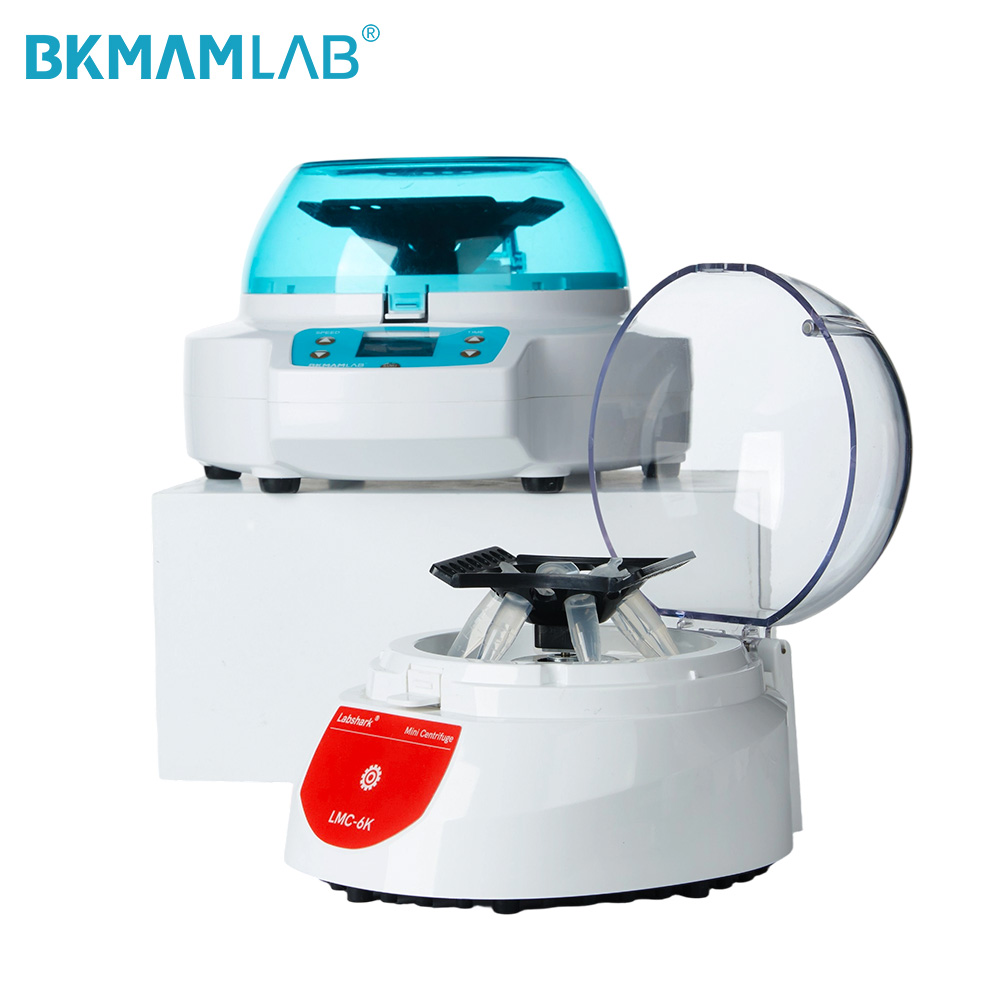
The benchtop separation market is segmented by maximum speed, tube capacity, and physical footprint. High-speed benchtop models generally operate within a range of 10,000 to 30,000 RPM, translating to roughly 15,000 to 65,000 x g depending on the specific rotor configuration. These units bridge the gap between basic clinical centrifuges used for blood separation and massive floor-standing ultracentrifuges used for viral particle isolation. They feature heavy-duty drive shafts, reinforced steel armor chambers, and advanced gyroscopic balancing systems to safely contain the immense kinetic energy generated at these velocities.
For routine clinical diagnostics and basic molecular biology tasks, a standard 12000 rpm centrifuge often serves as the primary laboratory workhorse. These units are highly effective for basic pelleting of bacterial cultures, separating serum from whole blood, and clearing cellular debris from small-volume lysates. When paired with a standard 24-place microtube rotor, 12,000 RPM typically generates around 13,500 x g. This handles standard daily operations but falls short for advanced applications requiring tight, hard pellets or the separation of very small macromolecules from viscous solutions.
Capacity and speed dictate the distinction between micro and standard high-speed units. A high speed microcentrifuge is specifically designed for low-volume applications, typically handling 1.5 mL or 2.0 mL microcentrifuge tubes. Because the rotors are small and lightweight, specialized microcentrifuges accelerate rapidly and reach extreme speeds—up to 35,000 RPM. This generates the immense g-forces necessary for precipitating fine nucleic acids or isolating specific subcellular fractions. Conversely, a standard high speed centrifuge accommodates larger volumes, such as 50 mL conical tubes or 250 mL bottles. While they may not reach 35,000 RPM due to the sheer mass of the larger rotors, they sustain high enough g-forces to process bulk cultures and large-scale purifications efficiently.
A higher rotational speed does not inherently mean a better piece of equipment. Selection must begin with the specific application. Applying excessive gravitational force to delicate samples causes irreversible damage. You might rupture mammalian cells before they are properly separated, or compact a protein pellet so densely that it becomes impossible to resuspend in your buffer. Evaluate the fragility of your target molecules, the viscosity of your gradients, and the required throughput before looking at machine specifications. Tube integrity also matters; standard polypropylene tubes will shatter if subjected to 25,000 x g without proper volume support.
Molecular biology workflows rely heavily on rapid, high-force separations. Precipitating DNA or RNA using isopropanol or ethanol requires significant force to drive the microscopic nucleic acid strands to the bottom of the tube. Typically, these protocols demand an RCF between 10,000 and 20,000 x g. Furthermore, modern spin-column extraction kits require high speeds to force viscous lysates and wash buffers through silica membranes. A robust high-speed unit ensures no residual buffer remains trapped in the membrane, which would otherwise inhibit downstream enzymatic reactions like PCR, restriction digests, or next-generation sequencing.
Isolating proteins presents a different set of physical challenges. After cell lysis, the resulting homogenate is highly viscous and filled with lipids, unbroken cells, and genomic DNA. Clarifying this lysate requires sustained high speeds, often exceeding 20,000 x g, to force the heavy debris into a tight pellet while leaving the soluble proteins in the supernatant. More importantly, proteins are highly susceptible to thermal denaturation. The friction generated by a rotor spinning at 20,000 RPM rapidly heats the chamber. Protein workflows strictly require refrigerated models capable of holding a stable 4°C throughout prolonged runs.
When isolating extremely small targets—such as exosomes, ribosomes, or engineered nanoparticles—laboratories must evaluate the threshold of their benchtop equipment. High-speed benchtop models maxing out around 65,000 x g successfully pellet larger subcellular organelles like mitochondria or chloroplasts. However, isolating smaller vesicles or separating molecules based on minute density differences requires forces exceeding 100,000 x g. At this threshold, a benchtop unit is no longer sufficient. The laboratory must transition to a floor-standing ultracentrifuge operating in a complete vacuum to eliminate air friction entirely.
Fixed-angle rotors hold tubes at a specific angle, typically between 25 and 45 degrees relative to the axis of rotation. This geometry is required to achieve maximum RCF. Because the tubes are held rigidly in place, the rotor is designed as an aerodynamic solid block, minimizing air resistance and allowing for extreme speeds. The physical consequence of this design is side-wall pelleting. The centrifugal force drives the particles outward against the side of the tube, and they slide down to form a pellet at the bottom corner. This is ideal for hard pelleting of bacteria, nucleic acids, and proteins. The steeper the angle, the tighter the pellet forms at the absolute bottom of the tube.
Swing-bucket rotors feature individual buckets that hang vertically when stationary and swing out to a horizontal 90-degree position during operation. This design allows particles to travel straight down the center axis of the tube, forming a perfectly flat pellet at the very bottom. Swing-bucket rotors are vastly superior for density gradient separations, such as Ficoll gradients for blood mononuclear cells, and phase separations. However, the moving parts, trunnion pins, and non-aerodynamic profile create significant drag and structural stress. Swing-bucket rotors have much lower maximum speed and RCF limits compared to their fixed-angle counterparts.
The material composition of the rotor directly impacts performance, longevity, and ergonomics. Metal fatigue is a serious consideration for any high-speed application.
Rotor Material | Advantages | Disadvantages | Best Use Case |
|---|---|---|---|
Aluminum Alloy | Excellent thermal conductivity, traditional durability, lower initial purchase price. | Heavy, slower acceleration/deceleration, susceptible to chemical corrosion and metal fatigue over time. | General purpose laboratories with standard budgets and routine protocols. |
Carbon Fiber | Extremely lightweight, rapid acceleration, highly resistant to chemical corrosion, longer fatigue life. | Higher initial procurement cost, requires specific care to avoid impact damage to the composite weave. | High-throughput labs requiring fast cycle times and handling corrosive solvents. |
Titanium | Unmatched structural strength, highly resistant to chemical degradation, supports extreme g-forces. | Exceptionally heavy, very high manufacturing cost, longer deceleration times. | Ultracentrifugation and specialized high-stress applications. |
When evaluating refrigerated models, look beyond the simple temperature range specification. The critical metric is the unit's ability to maintain 4°C while operating at maximum speed with a fully loaded rotor. Air friction at 25,000 RPM generates intense heat. Inferior refrigeration systems hold 4°C while stationary but creep up to 10°C or 15°C during a 30-minute high-speed run, risking sample degradation. Demand performance curves from the manufacturer that prove temperature stability at maximum velocity. Look for standby cooling or fast temp features that rapidly precool the chamber and the heavy metal rotor before the samples are loaded.
Bench space is a premium commodity in any laboratory. Evaluate the physical dimensions carefully, paying special attention to the lid-opening height clearance. A unit that fits under a shelf when closed might be unusable if the lid cannot open fully to allow rotor extraction. Ergonomics play a vital role, especially when dealing with high-capacity models. Lifting a fully loaded, solid aluminum fixed-angle rotor out of a centrifuge chamber requires significant physical effort. Lower deck heights and lighter carbon fiber rotors drastically reduce the risk of repetitive strain injuries for laboratory personnel.
Modern high-speed units exclusively utilize brushless induction motors. Older brushed motors generate carbon dust as the brushes wear down, which contaminates the laboratory environment and requires frequent maintenance. Brushless motors are virtually maintenance-free, offer smoother acceleration profiles, and operate much more quietly. In a shared laboratory space, operational noise is a major fatigue factor. Specify units that operate below 60 decibels at maximum speed to maintain a safe and comfortable working environment. The motor mounts should also feature heavy-duty dampeners to isolate minor vibrations from the benchtop.
For laboratories operating under Good Laboratory Practice (GLP) or Good Manufacturing Practice (GMP) guidelines, the user interface is a critical compliance tool. Basic analog dials are insufficient. Look for digital interfaces that allow for precise programming of speed, time, temperature, and acceleration/deceleration ramps. Advanced units offer user access controls via password or RFID, ensuring only trained personnel operate the equipment. The ability to export run logs and audit trails directly to a laboratory information management system is essential for maintaining strict quality control records.
Operating at high velocities exponentially increases the kinetic energy of the rotor. The most severe risk in centrifugation is an unbalanced load. Even a difference of a few grams between opposing tubes generates massive vibrational forces at 20,000 RPM, leading to catastrophic rotor failure, destruction of the equipment, and severe safety hazards for personnel. Precise mass balancing is a strict operational requirement. Tubes must be balanced by mass using a precision scale, not just by visual volume, especially when spinning samples of different densities like phenol-chloroform versus aqueous buffers. Always place equal masses directly opposite each other across the center axis. To mitigate human error, procure units equipped with active imbalance detection systems. These sensors monitor drive shaft deflection and automatically brake the motor to a halt if an imbalance is detected before destructive vibrations occur.
When processing infectious agents, viral vectors, or hazardous chemicals, aerosolization is a primary risk. The high-speed spinning action turns a minor tube leak into a highly dangerous aerosol cloud inside the chamber. Biohazard containment is non-negotiable for these workflows. Specify rotors and lids that are independently certified as aerosol-tight. These biocontainment lids utilize specialized O-rings to seal the rotor completely. In the event of a tube failure, the hazardous material remains trapped inside the rotor. The entire sealed rotor can then be safely transferred to a biosafety cabinet for proper decontamination and sample recovery.
To execute a successful procurement and implementation process for your laboratory separation equipment, follow these specific steps:
Audit all laboratory SOPs to identify the absolute maximum RCF and specific temperature requirements needed for your workflows.
Determine the maximum sample throughput and tube volumes required per run to select the appropriate rotor capacity.
Select rotor types based on the required pellet format, prioritizing fixed-angle for speed and swing-bucket for gradients.
Measure the exact bench space available, ensuring adequate clearance for rear ventilation and full vertical lid opening.
Request an on-site demonstration to verify rotor compatibility with your existing laboratory plasticware and assess operational noise levels under full load.
A: RPM measures the rotational speed of the rotor, while RCF measures the actual gravitational force applied to the sample. RCF depends on the rotor's radius. Because protocols require a specific physical force to separate particles, RCF is the only accurate metric for standardizing procedures across different machines.
A: It depends entirely on the rotor radius. In a standard microcentrifuge setup, 12,000 RPM typically yields between 13,000 and 15,000 x g. This gravitational force is generally sufficient for most routine DNA extractions, including pelleting and pulling wash buffers through standard silica spin-columns.
A: A high-speed microcentrifuge is a compact unit designed specifically for processing small sample volumes, typically using 0.2 mL to 2.0 mL tubes. Because of their small, lightweight rotors, these units accelerate rapidly and achieve extremely high speeds, with specialized models reaching up to 35,000 RPM.
A: Refrigeration is mandatory if you work with temperature-sensitive samples such as proteins, enzymes, RNA, or live cells. The intense air friction generated by high-speed rotation creates significant heat inside the chamber, which rapidly denatures or destroys labile biomolecules if not actively cooled.
A: Vibration is most commonly caused by improper mass balancing. Failing to place equal masses directly opposite each other in the rotor creates severe instability. Other causes include worn motor mounts, degraded O-rings, or a physically compromised rotor. Halt operation immediately and inspect the load.
A: Rotors have a finite operational lifespan dictated by metal fatigue, tracked either by total cycle counts or years of service. Manufacturers provide specific retirement guidelines for each rotor model. Aluminum rotors typically require replacement sooner than carbon fiber models. Always retire rotors according to the manufacturer's strict safety schedule.


