

close
Choose Your Site
Global
Social Media
Views: 0 Author: Site Editor Publish Time: 2026-09-01 Origin: Site


Inaccurate liquid handling compounds costs rapidly across any testing facility. A single systematic error in volume transfer invalidates entire microplates, forcing operators to restart protocols from scratch. This wastes reagents, compromises reproducibility, and delays project timelines. Navigating technical specifications requires balancing throughput demands, ergonomic risks like Repetitive Strain Injury (RSI), strict compliance standards, and the physical constraints of various labware vessels. Selecting the optimal instrument goes beyond matching a volume range. It requires a systematic, evidence-based framework. You must evaluate liquid handling tools based on the physical properties of the liquids transferred, specific application requirements, task complexity, and operational scale. By aligning mechanical capabilities with benchtop realities, laboratory personnel eliminate technique-driven variance and secure reliable data.
Match the displacement mechanism (air vs. positive) strictly to the physical properties of the liquid (viscosity, volatility, temperature) to prevent systemic volume errors.
Select volume ranges where the target transfer volume falls within the top 50–100% of the instrument's nominal capacity to ensure maximum accuracy and precision.
Prioritize ergonomic designs and electronic configurations for high-throughput workflows and complex tasks to mitigate operator fatigue and technique drift.
Establishing strict success criteria is the foundational step in outfitting any workspace with liquid handling tools. Operators must define what constitutes an acceptable transfer based on the sensitivity of the downstream assay.
Accuracy and precision are distinct metrics that dictate instrument performance. Accuracy refers to how closely the mean dispensed volume matches the target volume. Precision measures the variance between multiple dispenses of the same target volume. You can have a highly precise instrument that is consistently inaccurate, delivering exactly 9.5 µL every time it is set to 10 µL. Conversely, an accurate but imprecise instrument might average 10 µL over ten dispenses, but individual transfers fluctuate wildly between 8 µL and 12 µL. Establishing acceptable error margins requires analyzing specific assay sensitivity. Quantitative PCR demands exceptional precision to maintain tight standard curves. Routine buffer transfers tolerate wider accuracy margins.
When validating these metrics, technicians use gravimetric testing. This involves dispensing distilled water onto a calibrated microbalance in a climate-controlled room. The mass of the water is converted to volume using the Z-factor, which accounts for water density and air buoyancy at a specific temperature and barometric pressure. ISO 8655 mandates that this testing occurs in a draft-free environment with relative humidity above 50% to prevent rapid evaporation of the dispensed droplet before the microbalance stabilizes.
Pipetting is a highly repetitive task placing concentrated stress on the hand, wrist, and forearm. The success criteria for operator safety revolve around minimizing thumb force during aspiration and dispensing, reducing tip ejection force, and eliminating awkward grip strain. Prolonged exposure to high-force instruments directly causes Repetitive Strain Injury (RSI). Standard tip ejection can require up to 40 Newtons of force. Over a standard 96-well plate, this cumulative strain damages the extensor tendons in the thumb. Evaluating an instrument requires testing the physical resistance of the plunger spring and the mechanical advantage of the tip ejection system. A well-designed instrument allows the operator to maintain a neutral wrist position and requires minimal exertion.
The physical profile of the instrument must match the labware to ensure proper reach and prevent cross-contamination. Deep well plates and 15 mL conical tubes require narrow shaft designs to reach the bottom without the instrument body touching the vessel walls. Volumetric flasks feature long, narrow necks that restrict access for standard tip cones. Evaluating task complexity means mapping the physical dimensions of the liquid handling tool against every vessel type used in the protocol. Failure to match these profiles forces operators to tilt the instrument at severe angles. Tilting an air displacement instrument beyond 20 degrees alters the hydrostatic pressure of the liquid column, violating proper technique and compromising volume accuracy.
In regulated environments, liquid handling instruments must meet strict compliance standards. ISO 8655 outlines the specific requirements for volumetric apparatuses, including maximum permissible errors and standardized testing methodologies. Instruments used in clinical diagnostics or pharmaceutical manufacturing require traceable calibration certificates documenting their performance against these standards. Meeting regulatory compliance means selecting instruments that hold their calibration over time. They must be easily serviced and verified using gravimetric or photometric testing methods. Photometric testing uses dual-dye solutions and a spectrophotometer to measure absorbance, providing rapid verification of volume transfers without the environmental sensitivities of a microbalance.
The fundamental mechanism used to draw and dispense liquid dictates the instrument's compatibility with different chemical properties. Choosing the wrong displacement technology guarantees inaccurate results.
Air displacement relies on a simple mechanism. An internal piston moves to create a vacuum, and an air cushion separates the piston from the liquid in the tip. When the piston moves up, the air cushion pulls the liquid into the tip. This technology is the standard for handling aqueous solutions, biological buffers, and dilute samples at ambient temperatures.
However, the air cushion is highly sensitive to environmental and physical variables. Temperature variations cause the air cushion to expand or contract. If you aspirate a cold liquid, the air cushion contracts, pulling excess liquid into the tip. High vapor pressure liquids, such as acetone or ethanol, evaporate rapidly into the air cushion. This increases the internal pressure, causing the liquid to leak from the tip before it can be dispensed. Liquids with high specific gravity pull harder against the air cushion, resulting in under-delivery. Air displacement fails when handling liquids that alter the dynamics of the internal air pocket.
When operators are forced to handle viscous liquids with air displacement instruments, they must employ reverse pipetting. This technique involves pressing the plunger past the first stop to aspirate extra liquid, then dispensing only to the first stop, leaving the excess in the tip. While this mitigates some viscosity-related errors, it wastes valuable reagents and is highly dependent on operator consistency.
Positive displacement eliminates the air cushion entirely. The mechanism utilizes a disposable capillary piston tip where the piston makes direct, physical contact with the liquid. As the piston moves up, it draws the liquid directly into the capillary without any compressible air space in between.
This direct contact makes positive displacement the optimal choice for viscous liquids like glycerol, volatile solvents like chloroform, dense liquids, and corrosive chemicals. Because there is no air cushion to expand, contract, or absorb vapors, the physical properties of the liquid do not affect the aspirated volume. Secondary benefits include zero dead volume, ensuring expensive or limited samples are fully dispensed. The direct seal prevents aerosolized particles from traveling up into the instrument body. This provides absolute prevention of aerosol contamination when handling infectious or radioactive materials.
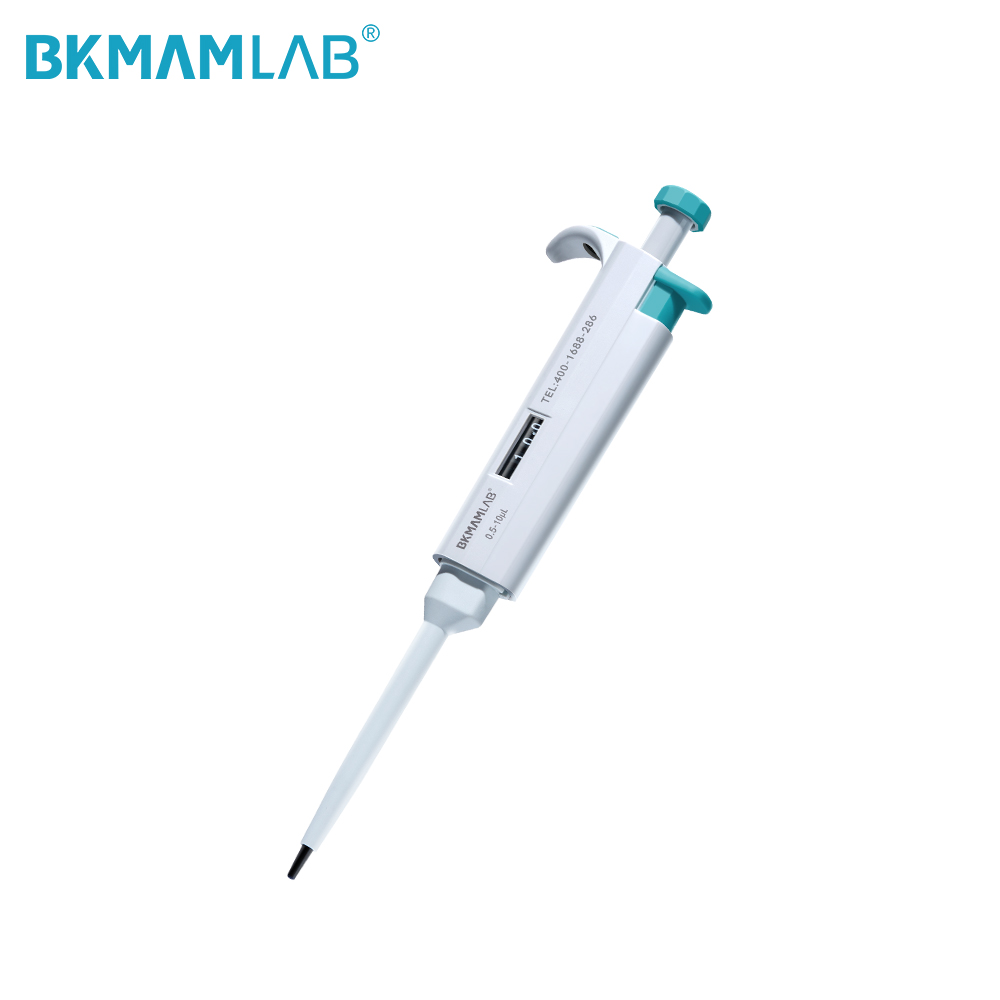
Scaling a workflow requires matching the instrument category to the daily throughput demands. A standard laboratory pipette comes in various configurations, each engineered to solve specific operational bottlenecks.
The manual pipette remains the workhorse for low-throughput, highly variable workflows and academic training environments. These instruments offer straightforward operation without requiring battery management or software programming. Operators benefit from tactile feedback during aspiration and dispensing. This allows them to feel the liquid movement and adjust their speed manually when handling slightly viscous samples.
The primary limitation is the heavy reliance on user technique. Consistent speed, angle, and plunger pressure are required to maintain precision. In high-throughput scenarios, such as filling multiple 96-well microplates, the repetitive thumb motion significantly increases RSI risk. Manual instruments are best deployed where task variability is high, but overall daily volume transfers remain low.
Electronic systems replace the manual plunger spring with a motorized piston. This design is best for high-throughput environments, complex protocols, and standardizing technique across multiple operators. The motorized control eliminates user-to-user variance. The piston moves at the exact same speed and distance regardless of who presses the trigger.
These systems enable advanced liquid handling modes tailored to task complexity. Operators program multi-dispensing functions to aliquot a single large aspiration into multiple smaller doses. They can also program automated mixing and serial dilution sequences. The trade-offs include the necessity of battery management and a heavier instrument weight due to the internal motor components.
Choosing between single and multichannel configurations depends entirely on the vessel format.
Single-Channel: Ideal for individual tube transfers, moving samples between variable vessel types, and executing complex, non-standardized layouts where each transfer targets a different location.
Multichannel (8, 12, 16, or 384-channel): Required for microplate-based assays like ELISA or PCR setup. Multichannel instruments allow operators to fill entire rows or columns simultaneously, drastically reducing protocol time and repetitive motions. When evaluating multichannel options, critical attention must be paid to channel-to-channel consistency. The tip cones must be perfectly aligned to ensure all tips seal evenly. A single loose tip on an 8-channel instrument compromises the volume drawn in that specific channel.
For transferring large volumes ranging from 1 mL to 100 mL, operators rely on a pipette controller paired with glass or plastic serological pipettes. This setup is standard in cell culture, media preparation, and chemical fume hood workflows where bulk liquid movement is required.
Evaluation criteria for these controllers focus heavily on motor speed control. Operators need the ability to switch between gravity drain for sensitive cell cultures and motorized blow-out for rapid media transfers. Ergonomic balance is critical, as these controllers are often held for extended periods inside biological safety cabinets. Battery life must support a full shift of continuous use. The quality of the inline hydrophobic filter is a strict requirement. This filter prevents accidental liquid ingress from flooding and destroying the internal motor if the operator over-aspirates the serological tube.
Procuring the right instrument requires analyzing specific technical dimensions that directly impact daily performance, contamination control, and consumable compatibility.
A common mistake in liquid handling is operating an instrument at the extreme low end of its volume range. The 10% Rule dictates that using an instrument at or near 10% of its nominal capacity drastically increases the coefficient of variation (CV). Pipetting 1 µL with a 10 µL instrument yields significantly worse precision than pipetting 1 µL with a 2 µL instrument. The mechanical tolerances of the piston and air cushion are optimized for the upper half of the volume range.
To ensure maximum accuracy, outfitting a lab bench requires overlapping volume ranges. This framework guarantees that operators always have an instrument where their target volume falls within the optimal 50–100% capacity zone.
Instrument Nominal Capacity | Optimal Operating Range | Avoid Using Below |
|---|---|---|
2.5 µL | 1.25 µL – 2.5 µL | 0.25 µL |
20 µL | 10 µL – 20 µL | 2 µL |
200 µL | 100 µL – 200 µL | 20 µL |
1000 µL | 500 µL – 1000 µL | 100 µL |
5000 µL | 2500 µL – 5000 µL | 500 µL |
Contamination control dictates the material construction of the instrument. You must differentiate between a fully autoclavable pipette, which can be sterilized whole in a steam autoclave without disassembly, and partially autoclavable models where only the lower half or tip cone withstands the heat and pressure. Fully autoclavable models are mandatory for microbiology and cell culture labs where pathogen cross-contamination is a severe risk.
Fully autoclavable models are manufactured using advanced polymers like Polyvinylidene fluoride (PVDF) or Polyetherimide (PEI). These materials resist the 121°C heat and high pressure of a steam autoclave without warping. If an instrument warps even a fraction of a millimeter during sterilization, the internal piston seal is compromised, leading to immediate calibration failure. Beyond autoclaving, evaluate the material resistance to UV irradiation, which is commonly used for sterilization inside biosafety cabinets. The polymers must also withstand aggressive chemical wipe-downs using 70% ethanol, 10% bleach solutions, or RNase decontamination sprays without degrading, cracking, or losing their calibration integrity.
The performance of any liquid handling instrument is entirely dependent on the quality of the tip attached to it. The system is only as accurate as the seal between the tip cone and the consumable.
Universal vs. Proprietary Tips: Universal tips offer supply chain flexibility. They are designed to fit multiple instrument brands. However, they may require higher mounting force to achieve a seal. Proprietary tips are engineered specifically for one manufacturer's tip cone, guaranteeing a perfect, low-force fit and optimal accuracy.
Purity Standards: Consumables must be verified for purity based on the application. Sensitive molecular assays, such as PCR or RNA sequencing, demand tips certified free of RNase, DNase, human DNA, and pyrogens to prevent sample degradation and false positives.
Low-Retention Tips: Manufactured with hydrophobic polymers, these are mandated for handling detergents, viscous proteins, and expensive reagents. They minimize sample loss by preventing liquid from clinging to the inside wall of the tip, maximizing recovery.
Filter Tips: Contain a porous barrier that blocks aerosols. They are mandatory for PCR setup and pathogen handling to prevent aerosol contamination of the instrument shaft, which would otherwise carry over to subsequent samples.
Extended-Length Tips: Feature an elongated profile required for reaching the bottom of deep well plates and tall vessels. They prevent the instrument shaft from touching the vessel walls, eliminating a common source of external cross-contamination.
Even with the correct instrument selected, operational risks during implementation can degrade data quality. Identifying these risks allows lab managers to enforce effective mitigation strategies.
Poor tip fit is the leading cause of liquid handling errors. When the internal taper of a tip does not perfectly match the angle of the tip cone, micro-leaks occur. These leaks are often invisible to the naked eye but result in continuous sample loss during transport and inaccurate aspiration volumes. Poorly fitting tips require operators to use excessive force by banging the instrument into the tip rack to secure a seal. This damages the internal calibration mechanisms and requires excessive force for tip ejection.
Mitigation requires conducting physical fit-testing and validation before bulk purchasing consumables. Operators should verify that the tip creates a perfect, airtight seal with minimal mounting force and ejects smoothly without straining the thumb.
As operators experience fatigue during long protocols, their technique inevitably drifts. Fatigue alters the pipetting angle, shifting away from the required vertical position. It also changes the rhythm and speed of plunger release. A rapid, uncontrolled plunger release causes liquid to splash up into the shaft, contaminating the instrument and reducing the aspirated volume.
Mitigation involves implementing mandatory ergonomic training focused on posture, angle, and smooth plunger operation. Lab managers should rotate tasks among personnel to limit continuous microplate filling sessions. For highly repetitive assays, investing in electronic or multichannel options is the most effective way to eliminate technique drift caused by physical exhaustion.
Using air displacement models to handle cold or warm liquids introduces severe volume errors due to thermal disequilibrium. When cold liquid is aspirated, it cools the internal air cushion, causing it to contract and draw in extra liquid. Warm liquids expand the air cushion, pushing liquid out of the tip before the operator intends to dispense.
Mitigation strategies include pre-wetting the tips by aspirating and dispensing the liquid three to five times before the actual transfer. This equilibrates the temperature and humidity of the air cushion inside the tip. Whenever possible, allow liquids to reach room temperature before handling. For highly temperature-sensitive assays where liquids must remain on ice, switching to a positive displacement instrument completely neutralizes the thermal risk.
Selecting the right liquid handling instrument requires a matrixed decision-making process. You must balance the physical properties of the liquid, the geometry of the vessel, the daily throughput demands, and the ergonomic safety of the operator. Relying on a single type of instrument for every application guarantees compromised data and increased physical strain.
To ensure successful implementation and accurate liquid handling, follow these next steps:
Request demo units from manufacturers to conduct hands-on evaluations with your specific labware and liquids.
Conduct in-lab ergonomic trials with the actual operators who will use the instruments daily to assess physical comfort and strain.
Verify the stability, purity certifications, and long-term availability of the tip supply chain before committing to bulk hardware procurement.
Establish a standardized internal maintenance schedule to clean, inspect, and verify the performance of the instruments between formal calibration cycles. This includes replacing worn O-rings and applying manufacturer-approved grease to the piston.
A: Air displacement uses an internal air cushion to separate the piston from the liquid, making it ideal for standard aqueous solutions. Positive displacement uses a disposable capillary piston that makes direct contact with the liquid, eliminating the air cushion. This makes positive displacement necessary for handling viscous, volatile, dense, or corrosive liquids accurately.
A: Use a manual instrument for low-throughput tasks, highly variable workflows, and academic training where tactile feedback is beneficial. Switch to an electronic instrument for high-throughput environments, complex protocols requiring multi-dispensing or serial dilutions, and to eliminate user-to-user technique variance.
A: The physical profile of the instrument and tip must match the vessel to prevent cross-contamination. Deep well plates and tall tubes require extended-length tips and narrow instrument shafts to reach the bottom without touching the sides. Microplates require multichannel instruments with perfectly aligned tip cones for simultaneous row filling.
A: Calibration frequency depends on usage intensity and regulatory requirements. In highly regulated environments like GLP or GMP facilities, calibration is typically required every three to six months. For standard research labs, annual calibration conforming to ISO 8655 standards is the minimum requirement to ensure ongoing accuracy and precision.
A: Fully autoclavable instruments can be sterilized whole in a steam autoclave without disassembly. This is absolutely necessary for microbiology, virology, and cell culture laboratories where eliminating all biological contaminants and preventing pathogen cross-contamination between samples is a strict safety and operational requirement.
A: Use low-retention tips when handling viscous liquids, detergents, or expensive proteins to prevent the sample from clinging to the plastic, ensuring maximum recovery. Use filter tips when performing PCR, handling infectious pathogens, or working with radioactive materials to block aerosols from contaminating the instrument shaft.


